

GET TO KNOW
OUR TRAINEES
Each year pre- and/or post-doctoral trainees are trained under TRIO. Training programs are set to develop research skills and encourage rigorous investigation under a team of mentors who are among the 70 TRIO faculty mentors from across our participating institutions. TRIO mentors bring strengths across three overarching areas, basic and translational research, clinical/ epidemiological/health services, and technology development. Our trainees are the heart of our program.
Each year brings an outstanding cohort of trainees who are engaged with the TRIO U2C/TL1 program, with each other, and with the broader cohort of KUH trainees in North Carolina and nationally.
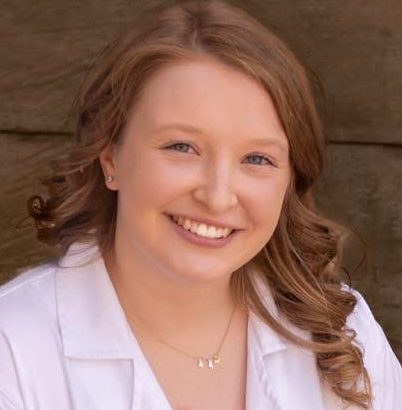
Madeleine (Maddi) Bibby
Predoctoral Scholar
Wake Forest University
Mentors: Mentors: Graca Almeida-Porada, MD
Maddi is a 3rd year PhD student at Wake Forest Institute for Regenerative Medicine in the Almeida-Porada lab studying a gene therapy and transplant fetal application as a novel means to cure Sickle Cell Disease. She is also working on a bone marrow organ-tissue equivalent to increase the translatability of our work to the clinic. Outside of school, Maddi is a competitive swimmer, loves to spend time outdoors, and travels as much as she can both around the US, internationally, and back home to Seattle.
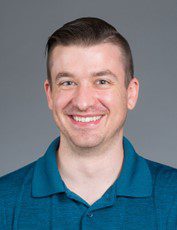
Joshua Bowlby
Predoctoral Scholar
Wake Forest University
Mentors: Mentors: Emmanuel Opara, PhD
Joshua began his scientific career with a bachelor’s degree in biology and became a certified Medical Laboratory Scientist in 2013. To expand his skills in leadership and research management, Joshua earned master’s degrees in Business Administration and in Science Management and Leadership from Webster University, followed by a master’s degree in Biomedical Engineering from Wake Forest University. Currently, he is a PhD candidate in Regenerative Medicine, where his research focuses on using extracellular vesicles as a therapeutic strategy for chronic kidney disease caused by diabetes. Joshua is particularly interested in intercellular signaling and drug delivery approaches that can advance regenerative therapies.

Timothy Dobroski
Predoctoral Scholar
Wake Forest University
Mentors: James Yoo, MD, PhD
Project title: Biomimetic Vascular Scaffold with Sustained Angiogenic Factor Delivery Enhances Vascularization and Renal Tissue Formation in vivo.
Timothy Dobroski is a fourth year Biomedical Engineering PhD student in Dr. James Yoo’s lab at the Wake Forest Institute for Regenerative Medicine. He received his B.S. in Biological and Agricultural Engineering from Louisiana State University in 2021 while conducting undergraduate research on the progression of diabetic kidney disease in mice under Dr. Krisztian Stadler. Currently Mr. Dobroski works on vascularized renal constructs for kidney regeneration, and the effect of microgravity on vascularized 3D bioprinted liver constructs. His research interest includes tissue engineering and regenerative medicine specifically for kidney and liver tissue.

Olivia Fay
Predoctoral Scholar
Duke University
Mentor: Xunrong Luo, MD, PhD
Olivia Fay is a graduate student in Pathobiology and Translational Biosciences at Duke University. She received her Bachelor of Science in Clinical Laboratory Science in 2020 from UNC. Olivia is interested in studying autoimmune disorders, transplantation immunology, and the role of genetics in disease pathogenesis. She chose Duke Pathology because of the program’s excellent faculty and resources, as well as the emphasis on translational research within the department. In her spare time, she enjoys reading, hiking, watching college basketball, and spending time with her family.

Kwame Forbes
Predoctoral Scholar
University of North Carolina – Chapel HIll
Mentor: Maria Aleman, PhD
Kwame is a graduate student at UNC in Bioinformatics and Computational Biology with an interest in differential splicing. Kwame is co-mentored by Drs. Maria Aleman and Daniel Dominguez. He received his A.S in computer science and B.S in biology, with a concentration in Computational Biology, from the University of the Virgin Islands (UVI). During his time as an undergraduate, Kwame was a RISE scholar who presented his research at ABRCMS in 2018 and 2019. Along with conducting research, Kwame was a teaching assistant for Genetics, and a Lab instructor for both Intro to Computer Science and for Chemistry. Kwame is passionate about computer science, biology, and research.
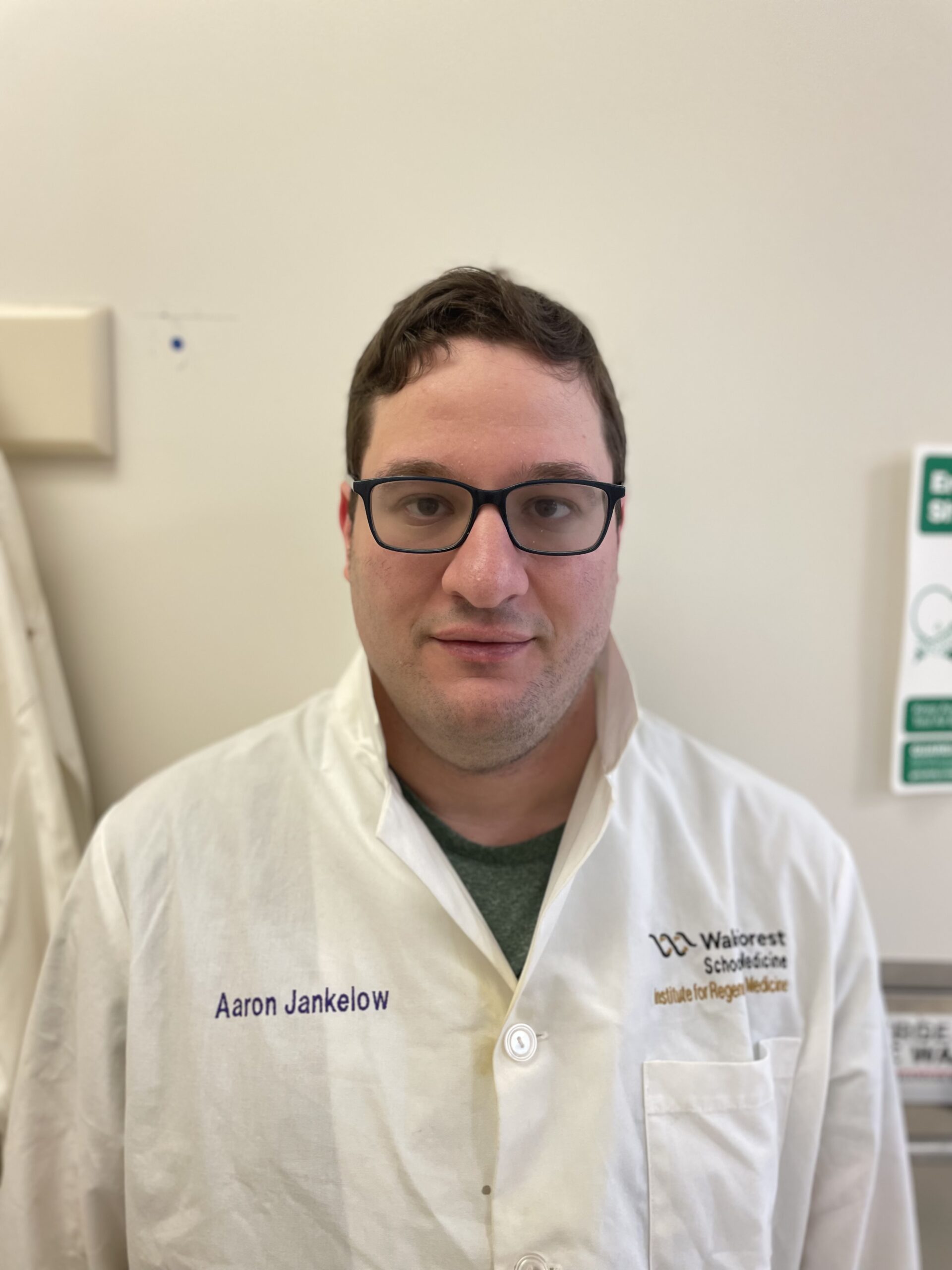
Aaron Jankelow, PhD
Postdoctoral Scholar
Wake Forest University
Mentor: Christopher Porada, PhD
Dr. Jankelow is a postdoctoral fellow in Dr. Christopher Porada’s group at the Wake Forest Institute for Regenerative Medicine. Dr. Jankelow received his PhD in Bioengineering and Biomedical Engineering from the University of Illinois Urbana-Champaign in 2024, with the majority of his dissertation work being focused on developing diagnostic microfluidic devices to perform on-chip sandwich immunoassays and developing and performing novel Loop-Mediated Isothermal Amplification (LAMP) assays. Currently, Dr. Jankelow is developing organ-on-a-chip (OOAC) technologies to answer critical questions about the mechanism of action of a clinical cell product for treating hemophilia A prior to birth, specifically focusing on delineating how these cells integrate and interact with the native cell populations in various organs. He is also using his background in bioengineering and diagnostic microfluidic devices to design and fabricate a novel point-of-care platform to precisely quantitate, with high sensitivity and in real-time, FVIII being produced by cells within the OOAC representing each tissue of interest.

Taylor Kess, PHD
Postdoctoral Scholar
Duke University
Mentor: Steven Crowley, MD
Project Title: RelA in myeloid antigen presenting cells limits NF-κβ mediated inflammation in chronic kidney disease and hypertension.
Dr. Taylor Kress is a postdoctoral researcher in the Division of Nephrology in the Department of Medicine at Duke University. He earned his bachelor’s degree in Biochemistry from the University of San Diego and his PhD with distinction from the Medical College of Georgia at Augusta University.
Dr. Taylor Kress’ research focuses on understanding functions of RelA in myeloid antigen presenting cells (APCs) to ameliorate chronic kidney disease and hypertension. Despite acting as a key component of the NFκβ signalosome, RelA in APCs paradoxically constrains T cell activation with consequent protective effects on kidney damage and blood pressure. This project will explore the mechanisms underlying this protection.
Outside of research, Taylor enjoys time outdoors and golfing.

Sarah McLarnon, PhD
Postdoctoral Scholar
University of North Carolina at Chapel Hill
Mentor: Lori O’Brien, PhD
Project Title:
Elucidating the role of renal mechanosensation in kidney development and physiology
Sarah received a Bachelor’s degree in Biology from the University of South Carolina-Aiken and a PhD in Physiology from the Medical College of Georgia at Augusta University. In 2022, Sarah joined the laboratory of Lori O’Brien, PhD as a postdoctoral fellow in Cell Biology and Physiology at UNC Chapel Hill. Sarah’s research investigates how alterations in nephrogenesis affect kidney function. Specifically, she is interested in the role of mechanosensation and sensory innervation of the kidney. She aims to identify novel targets to better treat patients with kidney disease.
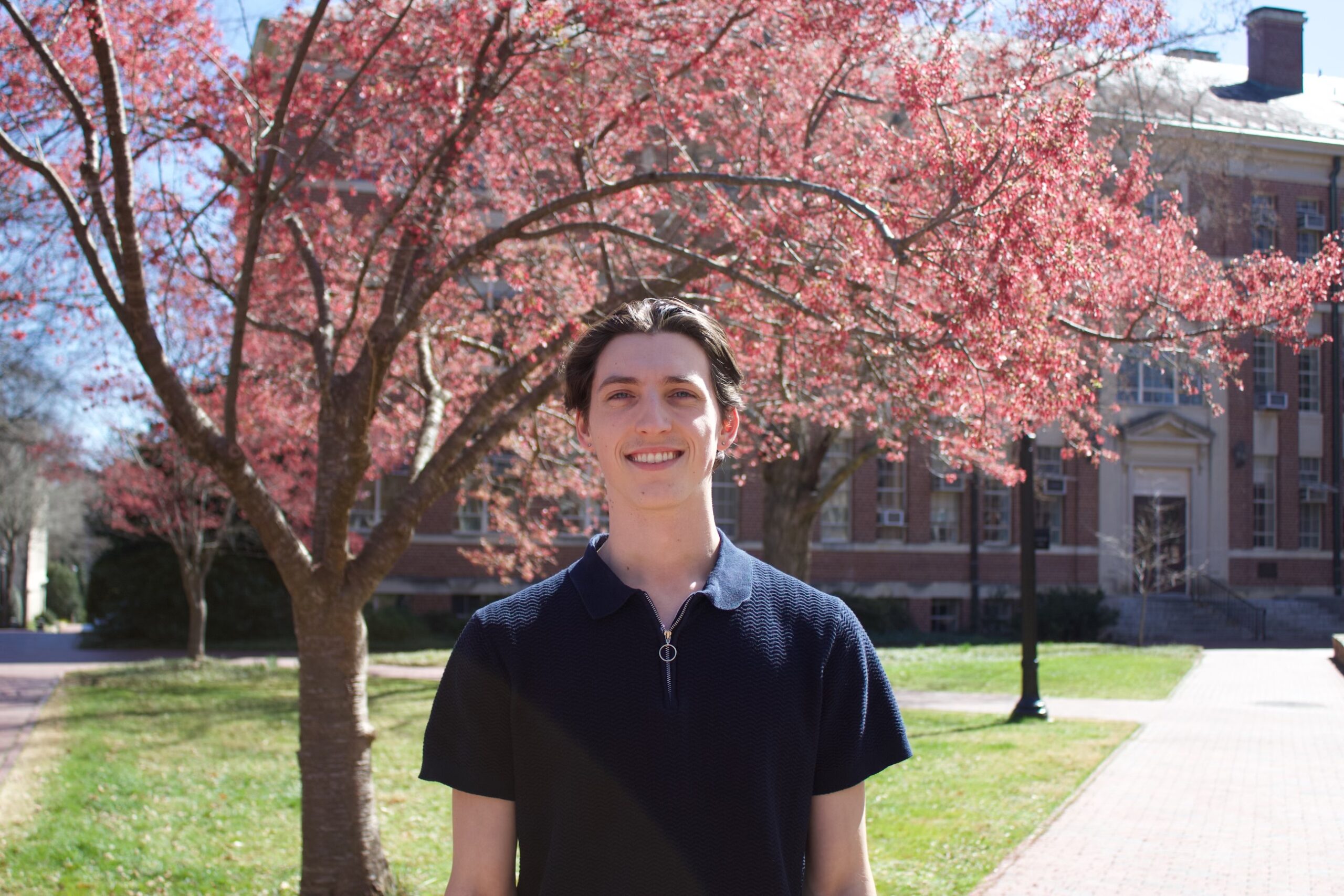
Joseph Metiva
Predoctoral Scholar
University of North Carolina at Chapel Hill
Mentor: Mark Schoenfisch, PhD
Joe is a second-year graduate student at UNC in the Biological Chemistry program who is mentored by Dr. Mark Schoenfisch. His current work revolves around the use of nitric oxide-releasing liposomal formulations for the treatment of infections. Joe received his B.S. in Biochemistry from Saginaw Valley State University (Michigan) where he also studied the morphological and behavioral effects of phthalates on rodents. In his free time enjoys playing volleyball, watching movies, and going on hikes.

Brendyn Miller, PHD
Postdoctoral Scholar
Wake Forest Institute for Regenerative Medicine
Mentors: Anthony Atala, MD, James Yoo, MD, Robert Hampson, PhD
Dr. Brendyn Miller is a postdoctoral researcher at the Wake Forest Institute for Regenerative Medicine. He earned his doctorate in Bioengineering from Clemson University where his research was focused on developing computational and experimental platforms for studying systems mechanobiology under the mentorship of Dr. William Richardson and Dr. Jeremy Mercuri.
Dr. Miller’s current research is focused on developing a bioreactor system for preconditioning and maturing urological tissue constructs. More specifically, he is engineering a sensor integrated bioreactor system that is capable of applying several physiologically relevant mechanical and biochemical conditions to urological tissue constructs to simulate those observed in the body. It is hypothesized that successful application of these stimuli to the tissue constructs during maturation could help enhance the performance of urologically engineered tissues following implantation. His mentor team, led primarily by Dr. Anthony Atala and Dr. James Yoo, includes Dr. Robert Hampson.

Martin Rodriguez, PhD
Postdoctoral Scholar
Wake Forest University
Mentors: Graca Almeida-Porada, MD, PhD, Christopher Porada, PhD
Dr. Martin Rodriguez is a postdoctoral research fellow in the Fetal Research & Therapy Program at the Wake Forest Institute for Regenerative Medicine. He earned his bachelor’s degree in Biomedical Engineering at Marquette University and received his doctorate degree in Molecular Medicine from Wake Forest University.
Dr. Rodriguez’s research interests are to study the hematological and immunological effects of direct AAV vector- and LV vector-based gene therapies for the treatment of bleeding disorders, including hemophilia A. Currently, he investigates the immune cell signaling response to clotting factor FVIII post-gene therapy in a prenatal and neonatal context. Dr. Rodriguez’s hobbies are to go hiking, mountain biking, bouldering, and running Spartan races with his wife.

Yasmin Roye
Predoctoral Scholar
Duke University
Mentors: Samira Musah, PhD, with co-mentor Steven Crowley, MD
Yasmin Roye is a PhD Student in Biomedical Engineering at Duke University, and a Duke-Alfred P. Sloan Foundation Scholar. She received her Bachelor of Science in Biochemistry from the University of Maryland Eastern Shore. Her research interests include disease modeling, extracellular matrices and microenvironments, and biophysics in health and disease. Her research interests include disease modeling, extracellular matrices and microenvironments, and biophysics in health and disease.
Yasmin enjoys building PCs, Chipotle, lattes, watching gaming streams, practicing violin and playing volleyball with friends.

Jenny Varner, MD
Postdoctoral Scholar
Duke University
Mentors: Rasheed Gbadegesin, MD, MBBS
Additional Mentors: Eileen Chambers, MD, Alex Ochoa, PhD
Originally from Durham, NC, Dr. Varner is completing her clinical fellowship training conducting research training. The research and clinical mentorship she received in medical school further developed her interests in nephrology, and she is now thrilled to be back at Duke for her fellowship in pediatric nephrology. She has published multiple manuscripts regarding the genetics of nephrotic syndrome as a medical student within the division, and her current research interests include nephrotic syndrome and novel therapies in transplantation.

Sarah Wachtman
Predoctoral Scholar
Wake Forest University
Mentors: Graça Almeida-Porada, MD, PhD, and co-mentor Christopher Porada, PhD
Sarah Wachtman is a 2nd year PhD Student in the Molecular Medicine and Translational Science program at the Wake Forest University School of Medicine. Under the mentorship of Dr. Graça Almeida-Porada and Dr. Christopher Porada, Sarah’s research is focused on in-vitro modeling of gene therapeutics for hemophilia A. Her work includes ascertaining the safety and efficacy of Lentivirus and AAV-based gene therapies, predominately in pediatric organoid models.
Sarah earned her Bachelor of Science in Biological Sciences from Florida State University and has a passion for research in the fields of genetics, gene therapy, and translational science. Beyond her research, Sarah enjoys rowing and exploring NC through hiking and skiing.
FORMER TRAINEES

Ben Catanese, MD
Ben Catanese, Post-doc, Duke
TL1 supported: September 2024 – June 2026
Dr. Catanese is a nephrologist pursuing clinical research who was supported on the TL1 for two years. He grew up in Richmond, VA before going off to college at Cornell University where he majored in Chemistry and swam for the varsity swimming and diving team. Following that, he attended medical school at New York Medical College and completed internal medicine residency training at Stanford. Beyond, Dr. Catanese lives with his wife, two dogs, and a cat in Durham, NC. They enjoy traveling, exploring new restaurants, and gardening.
The overarching theme of his research is to improve outcomes at the intersection between cardiovascular disease and chronic kidney disease (CKD). His long-term goal is to become an independent investigator and clinical trialist with a focus on developing novel methods to reduce cardiovascular complications experienced by patients with chronic kidney disease.

Anisha Gerber, MD
Anisha Gerber, Post-doc, UNC
TL1 supported: September 2023 – June 2024
Dr. Gerber is a pediatric nephrologist who completed two years of research training after her clinical nephrology training at UNC. The first year of her research training was supported by the NIDDK-funded T32 in UNC Nephrology, and she was supported through TRIO for her second year of training. While in training, Dr. Gerber earned a Master of Science in Clinical Research (MSCR) degree (2024) and built numerous foundational research skills through her degree and with hands-on research participation. In August 2024 she started a position as an Assistant Professor of Pediatrics at the University of Virginia, with 80% protected time for research. In January 2025, Dr. Gerber submitted a K12 application and continues her research focused on epidemiology and the management of pediatric chronic kidney disease in resource limited settings. She is passionate about advocating for healthier environments to protect child health.

Sumaiya Nazli, PhD
Sumaiya Nazli, Post-doc, WF
TL1 supported: September 2023 – August 2024
Dr. Nazli was supported on the TL1 during the first year of funding. She received her PhD in 2023 from Wake Forest University School of Medicine. Dr. Nazli’s research focuses on the discovery of early biomarkers to predict disease progression for Diabetic Kidney Disease (DKD). Her work is focused on understanding the proteomic changes induced by progression towards DKD.
This research is pivotal for developing innovative strategies to identify tissue-related proteins in plasma that can serve as diagnostic biomarkers, providing crucial insights into the pathogenesis and potential therapeutic targets for DKD. This contribution is poised to advance the understanding and management of this prevalent and challenging condition. Dr. Nazli is currently a Scientific Consultant at Eva Garland Consulting, LLC.

GABBY WILLIAMS
Gabby Williams, Predoctoral Scholar-UNC
TL1 supported: March 2024 – February 2025
Originally from the dairy state, Gabby grew up in Milwaukee, Wisconsin. Through a career in pole vaulting, she ended up studying biology at Murray State University. There, as a recipient of a Presidential Fellowship, Gabby pursued research under Gary Zeruth PhD. It was there that she grew to appreciate zebrafish as a model organism while studying the role of GLIS3 in zebrafish development. Gabby then took an internship up in Minnesota at the Mayo Clinic where she participated in a special nuSURF (nephrology & urology Summer Undergraduate Research Fellowship) and learned extensively about kidney biology & physiology. That internship guided her to apply for graduate programs where she could remain close to the nephrology field & translational medicine efforts. That desire brought her to UNC-Chapel Hill where she landed in the Kidney Center and was working on projects to understand the autoantigen regulation in ANCA Vasculitis as a means of developing targeted therapeutics. Outside the world of science, she loves to crochet, paint, and bake. Gabby just recently elected to complete the requirements for a master’s degree instead of a PhD degree in Cell Biology and Physiology at UNC for now.